Submission to Hobart Housing Action Plan

The City of Hobart has been consulting on a Housing Action Plan: a short to medium term strategy to increase housing density, diversity, and affordability across the Hobart LGA. Consultation closes this week, and we've made a submission.
Ben and Penelope Clark prepared the submission, which was reviewed and submitted on behalf of SPLH. Overall, we endorse the Plan and commend the Council for taking the housing crisis seriously. We also had a few ideas to strengthen it.
Streets People Love Hobart
Submission to the City of Hobart Housing Action Plan
19th March 2026
Prepared by Ben Clark and Penelope Clark
Reviewed and submitted by Mark Donnellon
Thank you for the opportunity to contribute ideas for the development of the Housing Action Plan (the Plan).
Streets People Love Hobart is a community-led initiative organised by a passionate group of local advocates. Our mission is to engage people and advocate for streets that prioritise people, safety, and sustainability.
We endorse the Plan, and commend the Council on its leadership to respond to the need for more affordable housing stock for our diverse communities.
Members of our group have read the Plan, and the Background Paper that informed it. We also considered the policy direction that the Council and State Government have committed to, or published in draft form, which supports the Plan. Our response is in the same sequence as the Plan is presented.
Incentives and deterrents (p. 11-13)
We query the statement that ‘Residential development in Hobart is often not financially viable’. We note that ABS census data shows that Hobart LGA had 23,681 private dwellings in 2016 and grew to 24,738 by 2021 (an increase of 4.46% in total private dwellings in 5 years). This would indicate that there must be viability at some scale. Further interrogation of the data showed that separate houses had increased by 8.3%, semi-detached and terrace homes had increased by 14.6%, and flats/apartments had increased by 3.21% (Source: ABS Quick Stats, Hobart LGA - area code LGA62810).
We suggest amending the statement to: “Development of some types of medium-density residential dwellings (such as flats and apartments) in Hobart is often not financially viable”.
We support the use of differential rates to deter inner city land being used for lower value purposes. One example we suggest it be used is underutilised sites, such as ‘at grade’ carparks or vehicle sales yards. If the zoning permits, having these sites subject to a rate that would incentivise their higher purpose (such as housing) being activated[1].
Action 1.5 notes the Public Open Space Contributions Policy as one for investigating whether it may have adverse impacts on appropriate residential development. We caution Council against trading this away without full consideration of the benefits the policy provides for current and future generations of Hobart’s residents.
We note the policy includes the ability for Council ‘to augment or upgrade active recreation facilities, rather than for maintenance of existing infrastructure’ (Section 4, clause 8a). Given the extensive program of works Council has identified through a number of Local Area Mobility Plans, and the recent Draft Open Space Strategy, we suggest Council will need these contributions to deliver its goals. Instead, the Council could work with development industry leaders to emphasise the value of public open space to the overall amenity of the locality, and population health more generally[2].
Strategic land use planning (p. 17-20)
We strongly support the H2G urban renewal project, and the Northern Suburbs Transit Corridor Urban Renewal project.
Similarly, we endorse the granting of development rights to increase viability of social and affordable housing, including a reduction in the number of car parking spaces, in specific areas close to public transport and active transport infrastructure (as per Action 3.8). We recognise the financial impact of parking requirements on development feasibility can be substantial. Research prepared for NSW Treasury found that around one-fifth of the construction cost of a mid-rise apartment is attributable to car parking provision. This presents a substantial impost for affordability of units/apartments.[3]
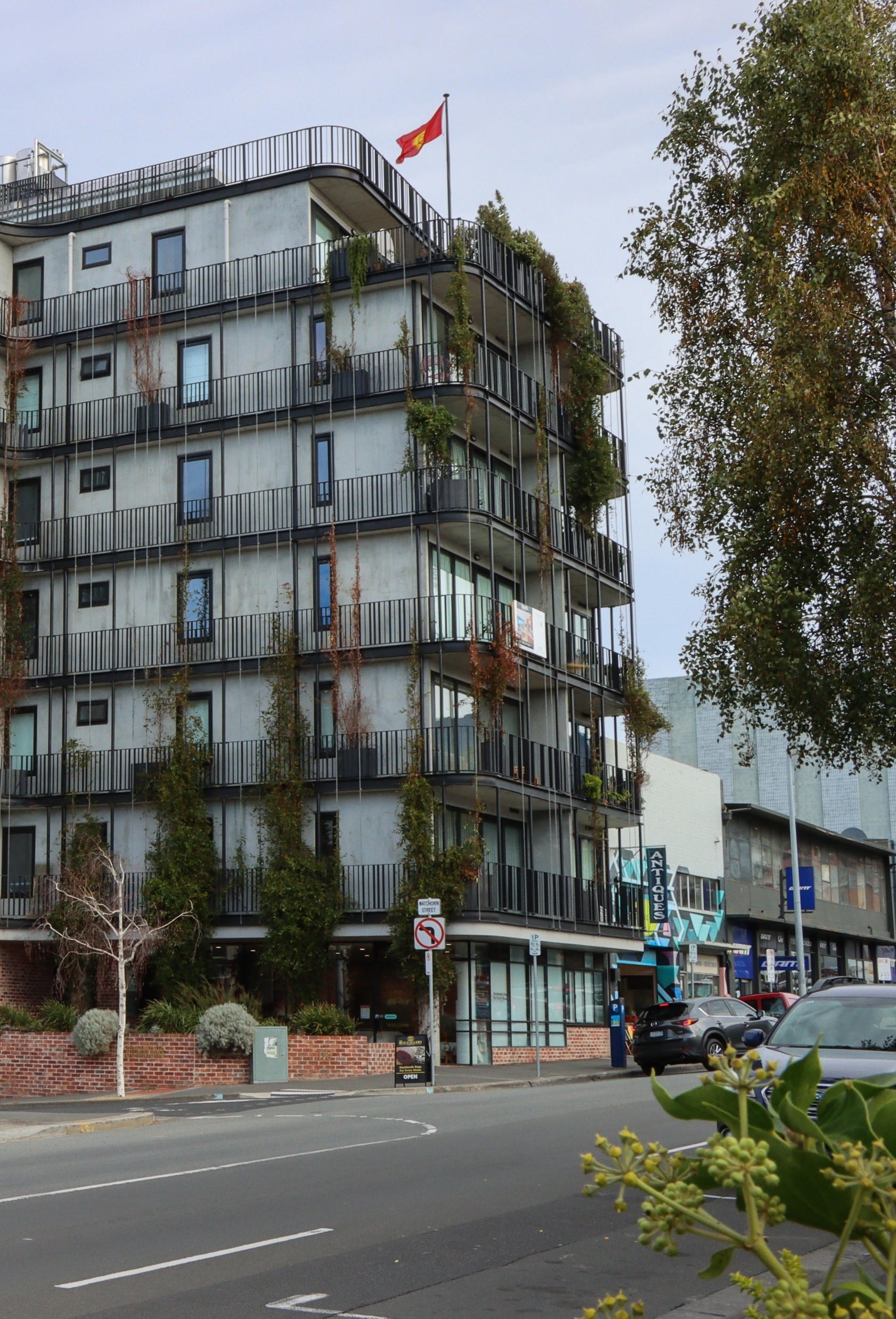
Our support is with the proviso that the development must provide adequate secure bicycle parking (including for cargo bikes) and car share spaces for the expected residential occupancy. We understand this was the case with “The Commons” in Bathurst St, where 30 bike parking spaces, and two car spaces are provided for the 30 apartments and 2 retail spaces. This also aligns with Principles 4.5 and 4.8 of the Hobart Design Guidelines.
We note that Council recently published the 2025 Hobart Neighbourhood Greenways Study which included recommendations for 10 neighbourhood greenways, covering almost all of the Hobart LGA’s neighbourhoods at lower elevations. We suggest that any residence within 300m of an existing active transport network, or planned active transport network segment or neighbourhood greenway that is identified in an adopted strategy be considered eligible for a reduction in car parking spaces.
 YIMBY Hobart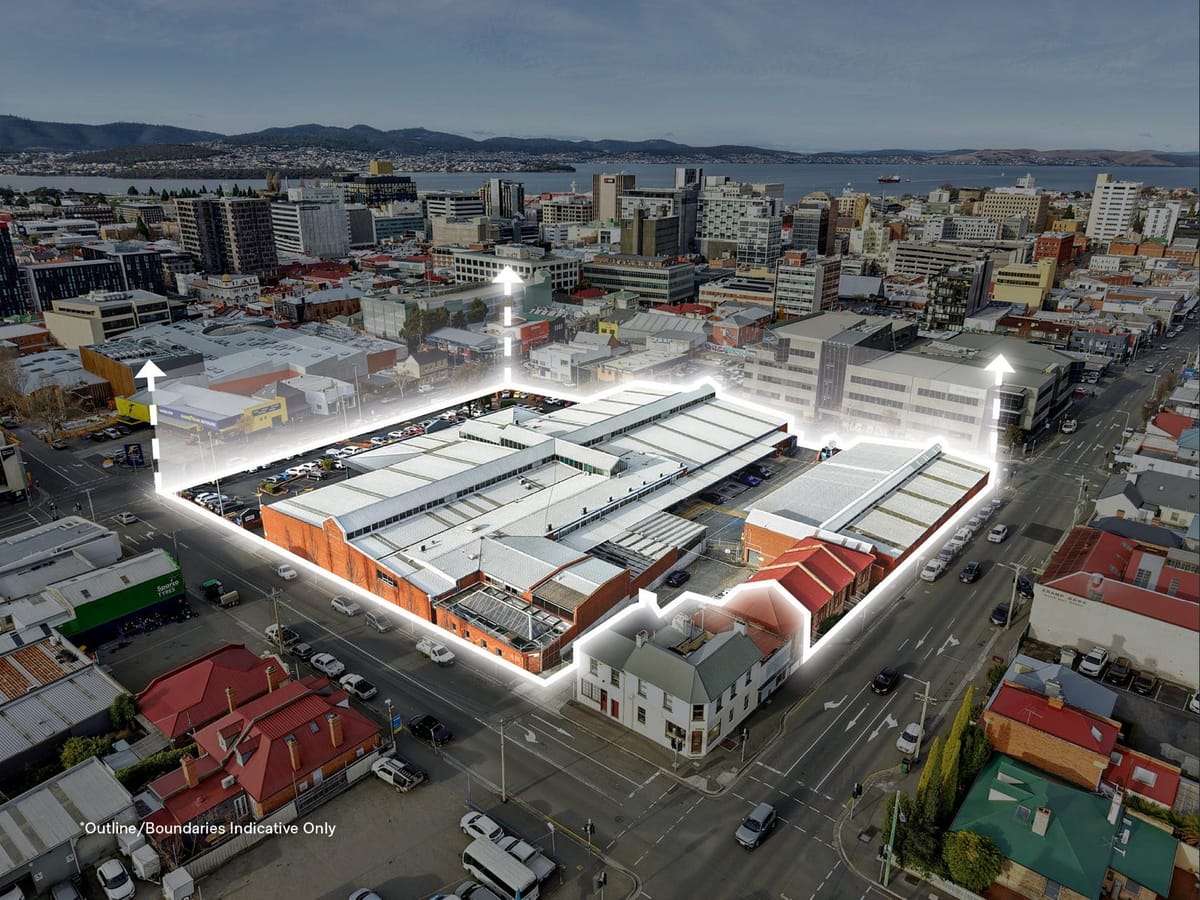
Underutilised land (p. 21-22)
As per our earlier reference to the “Speculate” report, we support Action 4.2 and suggest this work be the starting point for conversations with the property sector to stimulate inner city redevelopment, particularly in the ‘Innovation Precinct’ (as per Central Hobart Plan).
Exemplar projects (p.23-24)
We recommend profiling some of the following exemplar projects from cities around Australia:
Uno Apartments (Adelaide, SA) - This project won the National High Density UDIA award in 2013. It comprises a mix of apartments for investors, first home buyers, selected social housing tenants and eligible tenants from Housing SA's Affordable Homes Program, as well as a youth crisis accommodation service over the ground floor retail off the Waymouth St frontage[4].
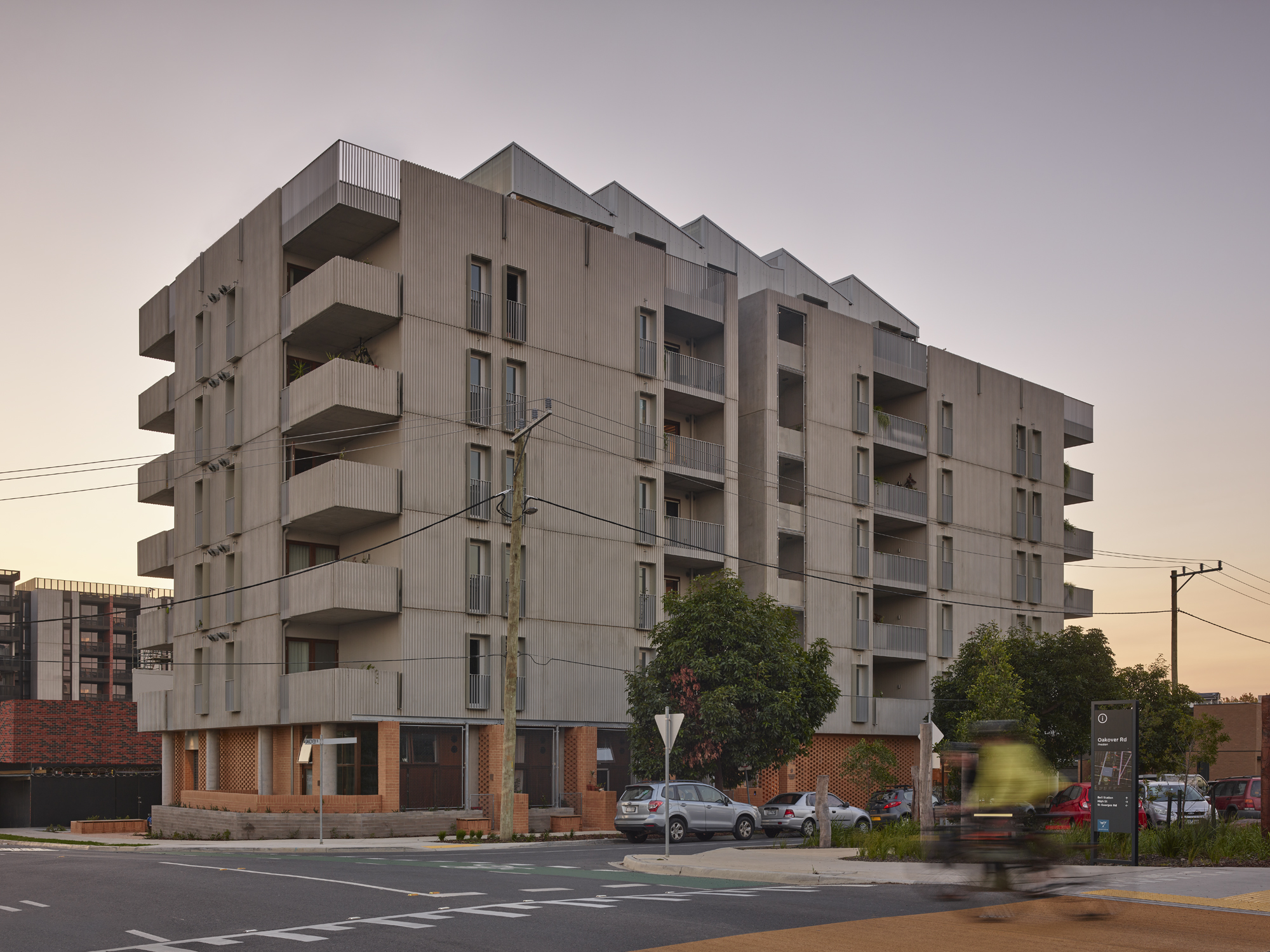
Nightingale Preston (Preston, Vic) - A new residential village within the Bell Station area, this won the 2025 UDIA National Award for Design Excellence. The Apartment mix includes 7 x Teilhaus, 20 x 1 Bedroom, 25 x 2 Bedroom and 2 x Commercial[5].
Navali (Penrith, NSW) - the nine storey Navali development has 26 units set aside exclusively for NDIS and affordable housing tenants. The exclusive apartment complex in Penrith features 163 one, two and three bedroom apartments with a co-working space, communal kitchen, communal cinema and communal vegetable garden. The building is also solar powered and uses grey water[6].
We trust this is helpful in refining the Plan and making it final.
Yours sincerely,
Mark Donnellon
President – Streets People Love Hobart
[1] The “Speculate” report by UTAS Architecture students in collaboration with City of Hobart in 2017-18 identified 424 lots across inner Hobart that were under-utilised (i.e. once heritage, religious and education buildings were excluded from the analysis, where the capital value as a percentage of land value was less than 40%).
Hall, E., Bomford, S., McNeill, M. & Oh, A. (2019). Speculate: Expanding City — Underutilised Sites. Regional Urban Studies Laboratory, University of Tasmania, in association with City of Hobart. https://hdp-au-prod-app-hba-yoursay-files.s3.ap-southeast-2.amazonaws.com/5417/6301/6770/c71d80451d0e3515287d6c2a8b8b4d6c_Speculate_Expanding_City_underutilised_sites_-_UTAS_Jan_2019.pdf
[2] Urbis (2024). The Growing Value of Greenspace: 2024 Update. Prepared for Nature Based Cities Ltd, November 2024. https://naturebasedcities.org.au/files/Urbis_Growing_Value_of_Green_Space_November_2024.pdf and
Davern, M., Farrar, A., Kendal, D. & Giles-Corti, B. (2017). Quality Green Space Supporting Health, Wellbeing and Biodiversity: A Literature Review. National Heart Foundation of Australia (South Australian Division). https://parksleisure.com.au/wp-content/uploads/parc-library/722-0-Green_Spaces_Evidence_Review_-_FINAL_website.pdf
[3] Centre for International Economics (2024). Cost and feasibility estimates for supplying new residential dwellings in New South Wales. Prepared for NSW Treasury, 16 August 2024, p. 1. https://www.productivity.nsw.gov.au/sites/default/files/2024-11/2024114_CIE-report-Cost-and-feasibility-estimates-for-supplying-residential-dwellings.pdf.pdf
[4] https://greenwayarchitects.com.au/project/uno-apartments/
[5] https://www.nightingalehousing.org/project/nightingale-preston
[6] https://www.writeaway.com.au/client-news/new-penrith-development-helps-ease-sydneys-housing-crisis-affordable-living-experience/