Federal Budget Delivers More Active Transport Funding
SPLH's Productivity Commission submissions helped shape a $500m federal Active Transport Fund, unlocking $1b for walking and cycling nationally.


Federal Budgets are usually something that don’t excite many other than economists.
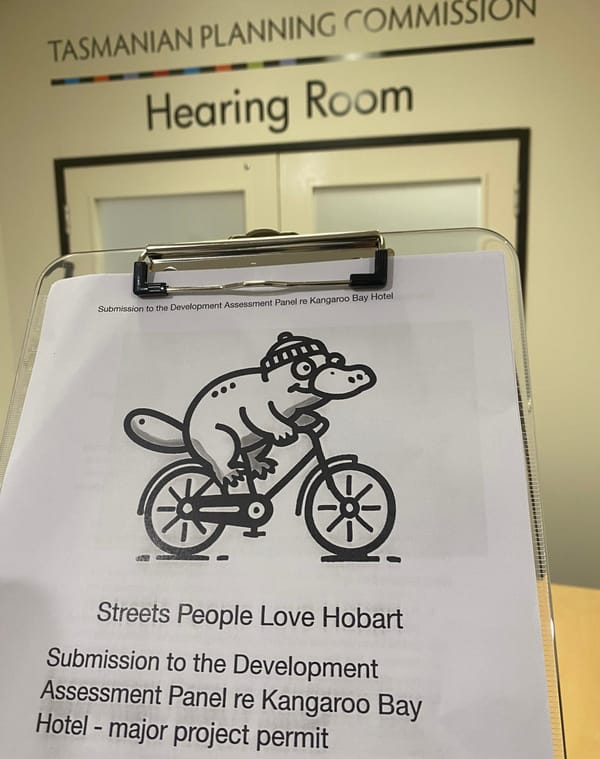
Streets People Love Hobart took a particular interest in this year’s budget, off the back of our three submissions as part of the Economic Reform Roundtable inquiries to five pillars of productivity in mid 2025:
- Pillar 1: Creating a more dynamic and resilient economy,
- Pillar 4: Delivering quality care more efficiently; and
- Pillar 5: Investing in cheaper, cleaner energy and the net zero transformation
Our submission authors were Michael Morgan-Giles, Mark Donnellon and Ben Clark (views expressed are those of Streets People Love Hobart as an organisation and do not represent the positions of contributors' employers).
This process was coordinated by the Productivity Commission, and among our key recommendations to improve national productivity were:
- increasing active transport funding from 1.2% of the road and rail budget to between 10-20%, in line with international best practice (with economic benefits estimated to add $8.5b – $15b value to the national economy);
- remove the incentives for private vehicle use (such as the exemption for utes from the Luxury Car Tax), as well as consider carbon prices, congestion pricing, and a broader wealth-based tax (instead of their proposal to cut company tax);
- explicitly linking national infrastructure funding to projects that support and advance the objectives of the National Urban Policy and National Housing Accord (such as prioritising residential apartment buildings and affordable housing, and climate resilient communities);
- Develop a National Spatial Strategy and Infrastructure Plan to guide where and how growth occurs (such as integrated biodiversity and active transport corridors to significantly enhance transport choice, help mitigate flooding risk and reduce urban heat) and
- Trial a National Prevention Investment Framework (NPIF) as a model for funding primary prevention in the broadest possible sense - improving the design of the cities and towns in which nearly 18 million Australian live for better health and productivity outcomes.
The Productivity Commission’s “What We Heard” summary report for Pillar 5 - Investing in cheaper, cleaner energy and the net zero transformation, acknowledged our submission calling for the removal of Fringe Benefits Tax and luxury car tax exemptions, as well as the leadership required across all three tiers of government in planning for climate resilience in our cities and regional centres.
In December 2025, the Commission handed down its final reports. Two of the key recommendations, from our perspective, were:
- improve coordination of public and private-investment to deliver measurable improvements in neighbourhood and precinct-level resilience.
- The Australian Government should work with state and territory governments to establish a National Prevention and Early Intervention Framework. The framework would recognise prevention and early intervention as a strategic investment for governments and support them to invest in programs that improve outcomes and reduce demand for future acute and crisis care services.
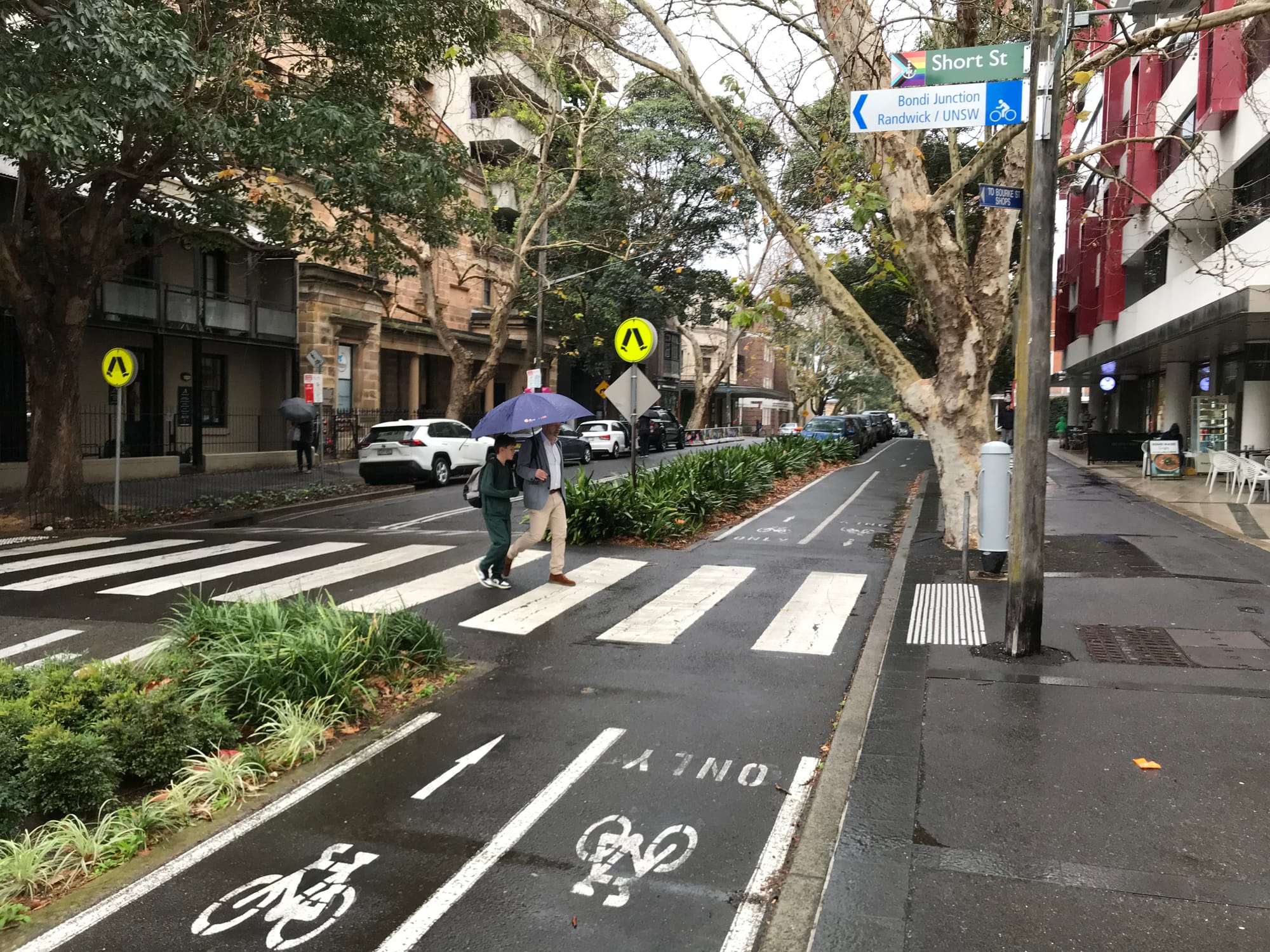
Whilst the Treasurer didn’t highlight it in his Budget speech, some careful reading through Budget Paper 2 revealed an allocation of $500 million over ten years from 2026–27 (and $50.0 million per year ongoing) to continue the Active Transport Fund. This directly supports the construction and upgrade of bicycle and walking paths across Australia, to provide modal choice, improve safety and reduce transport emissions. This is a significantly increased investment, from the initial $100m over five years that was announced in 2024.
As the Active Transport Fund is based on a dollar matching contribution from State and/or local governments, it effectively means a $1 billion public sector investment in active transport infrastructure for the nation over the coming decade. The Federal Infrastructure and Transport Minister Catherine King has ‘front-loaded’ the program to maximise its impact in the first three years, with $234.3m allocated from 2026-27 to 2028-29 (Source: Budget Paper No.3 Infrastructure Part 2 – Payments for Specific Purposes).
Funding is allocated on a merit basis, with projects ranked against three criteria:
Criterion 1: Strategic fit
Project rationale - why there is a strong case for action, how it will achieve the
stated objectives, and how it meets the needs of the community.
Criterion 2: Project impact and benefits
Demonstrate the road safety, social, economic and environmental value of the project with supporting evidence-based analysis
Criterion 3: Project deliverability
Demonstrate the capability and capacity to deliver the project, including mitigating identified risks.
The program allows Councils to directly apply, with the 2025 funding round including grants to Brighton Council for the Brighton Road and East Derwent Highway Shared Path (connecting to the new Bridgewater Bridge), and Tasman Council for a 4km multi-use walking track that connects the towns of Nubeena and White Beach.
As the Tasmanian Government currently has no dedicated active transport fund, it leaves Councils having to self-fund the co-contribution for any projects they nominate (which puts some at a significant disadvantage, due to their limited financial capacity).
We will continue to advocate to the Tasmanian Government for a reinstatement of the Tasmanian Active Transport Fund, to ensure our state is able to make the most of this significant opportunity.