Tasmanian Government Budget 2026-27 - Active transport analysis

At the start of a new financial year, we thought it was worth looking at what the State Government has in store for active transport over the coming 12 months (and beyond).
Many former Treasurers have noted that budgets are all about priorities: where Governments allocate funding shows what they value. Tasmania's Treasurer, The Hon. Eric Abetz, had foreshadowed a 'fiscally responsible' budget, with a focus on cutting government spending.
Road building projects have been spared, with $1.7b allocated over the coming four budgets (to 2029-30) (1). Many of these form part of larger projects with promising titles, such as the "Greater Hobart Traffic Solution", "Urban Congestion Fund", "Targeting Congestion Package" and the "South East Traffic Solution".
Meanwhile, funding for active transport was slashed (2). Both of the Better Active Transport Fund programs (there was one for the entire state's 29 Councils and one for the four metropolitan councils that comprise Greater Hobart) were cut from the budget from this year (2026-27) to the end of the forward estimates (2029-30).
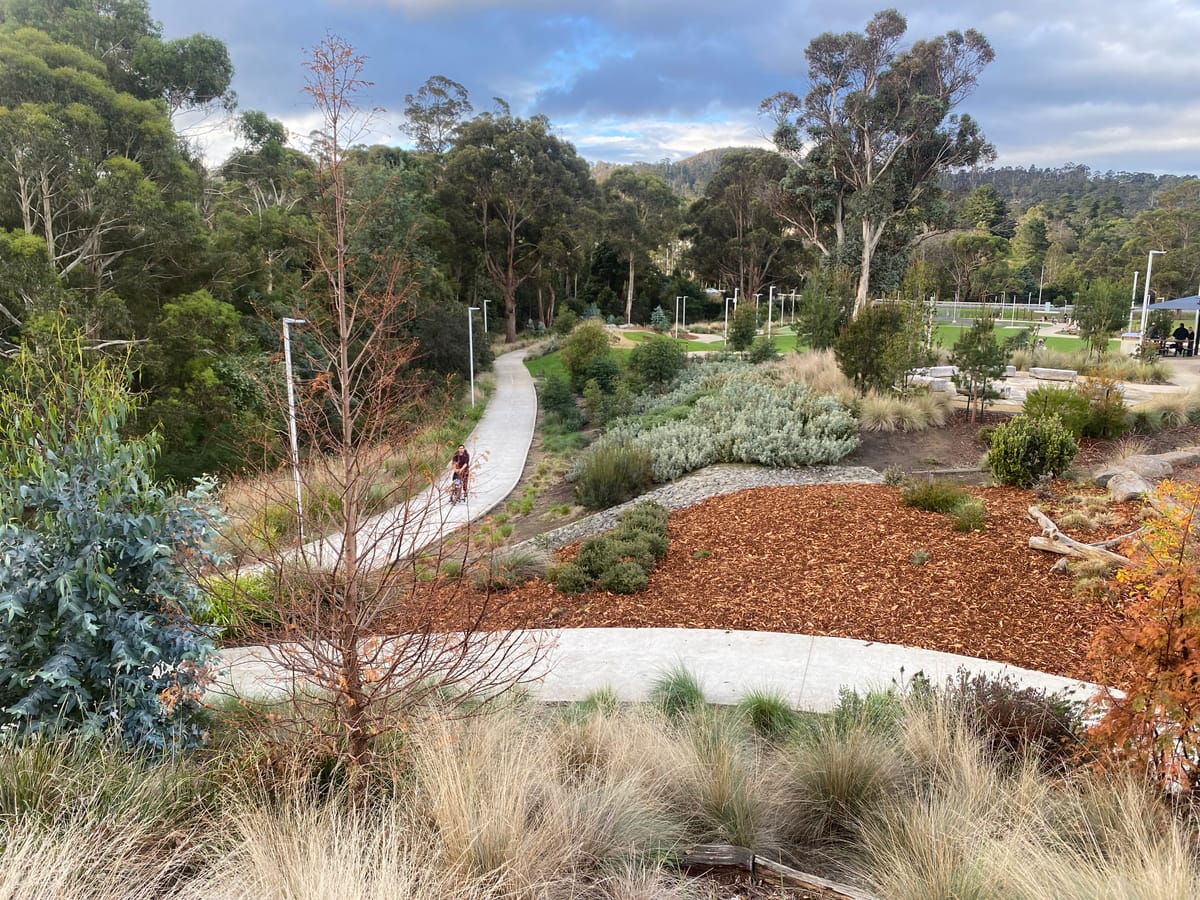
From their inception in 2023, there were two funding rounds that provided $8.897m across 14 Councils to assess feasibility, plan or construct 29 walkways and/or cycleways. These projects spread right across the state, with seven regional councils benefitting, and ranged from cycle connections in Zeehan, Devonport and George Town to shared-use paths in Youngtown, Bagdad and Kempton. Within Greater Hobart, 17 projects, feasibility studies or designs were funded (3). Many of these required the catalyst of State funding support to proceed, as most Councils have limited financial capacity to entirely self-fund larger scale projects. Those that were built have become valued community assets.
Best practice funding for improving active transport recommends 10% of the road and rail budget should be directed to active transport infrastructure (4). If Tasmania were to adopt that recommendation, it would equate to $170m over the next four years. This could deliver a substantial amount of the Greater Hobart Cycling Network (endorsed by the State Government and four metropolitan Councils in 2019) and other significant projects around the State.
The State Government's own research shows the single biggest motivator for increased cycling and e-scooter use is physically separated infrastructure (i.e. protected lanes), with 26.7% and 9.2%, respectively, of Greater Hobart residents nominating this (5). Providing this safer infrastructure to connect communities would significantly improve transport choice, and enable people to shift some of their trips to active transport.
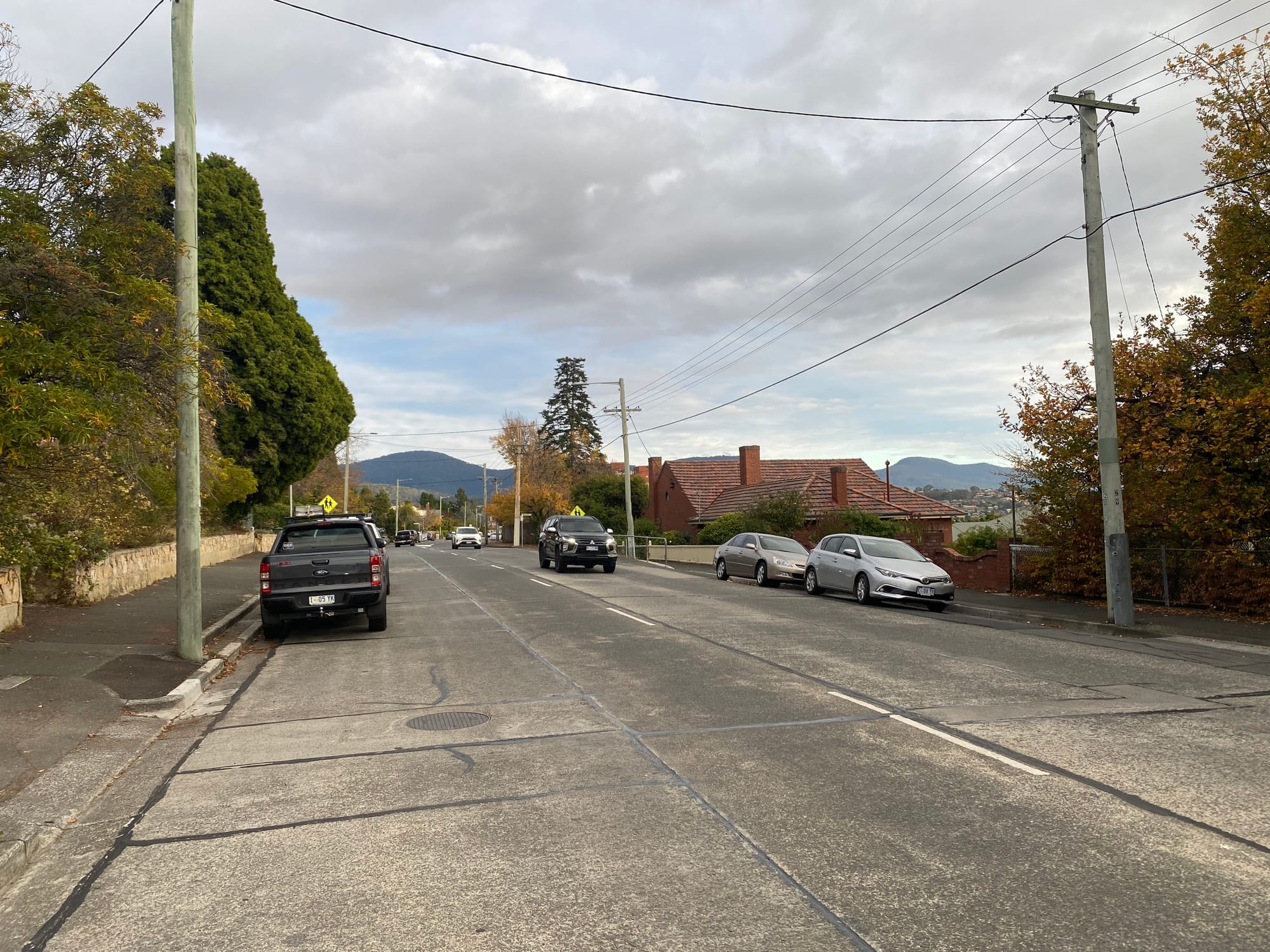
Within Greater Hobart, four Councils have comprehensive plans to improve walking, wheeling and riding within their communities: Kingborough completed its plan in 2021, Clarence and Glenorchy in 2025, and Hobart in 2026.
The projects each Council has identified will make a meaningful difference for their communities: children walking to school, parents going to work, older residents going about their daily lives, and people using mobility devices.
Despite the significance of the decision to axe the Better Active Transport Fund, there are some positives in the Budget for walking, cycling and public transport in Greater Hobart (noting that only the first commitment below is a new funding initiative):
- Continuation of free public transport until 30 June 2027 - within months of this being offered, it has resulted in up to a 40% increase in passengers on some routes.
- $5m for the Bellerive Ferry terminal upgrade to be completed by June 2027 as part of the Derwent River Ferry Expansion Project. Three new terminals at Sandy Bay, Lindisfarne and Wilkinsons Point, are being funded via the Federal Government, with all expected to be built over the following two years (by 2028).
- Safety barrier upgrades (including passing bays) to enable safer movement by people walking and cycling over the Tasman Bridge.
- Five small projects to improve cycling access to the Intercity Cycleway in Glenorchy (also in anticipation of the Bus Rapid Transit (BRT) Northern Corridor project, which is dependent on Federal funding). The projects will link existing cycle paths by building new paths, add clear signs and improve lighting.
At the Budget Estimates hearing in June, the Minister for Transport, Kerry Vincent MLC, released the Walk Wheel Ride Strategy (6) - which sets the ambitious target of increasing the percentage of short trips (less than 5km) by active transport by Tasmanians to increase from 32% to 50%. At the same time the Minister also released the the Tactical Cycling Infrastructure Guide and the Tasmanian Cycling Network Planning Guide.
All three documents are well thought out, and are welcome resources to help improve design and connectivity of infrastructure that makes it safer for people to walk, ride and use wheeled mobility devices (such as wheelchairs, prams, mobility scooters, etc.). However, the lack of an action plan or implementation plan, nor dedicated funding, will make it hard to achieve the Strategy's five targets. The importance of ongoing funding is also reflected in this statement from the Walk Wheel Ride Strategy (p.21):
Achieving the overall goal and outcomes of this strategy will require sustained and ongoing investment from all levels of government. Active transport infrastructure is often delivered as part of larger transport projects under the Department of State Growth’s Capital Investment Program. Funding for individual projects is available through a number of state and federal government programs, including the Tasmanian Government’s Vulnerable Road User Program (VRUP).
In response to questioning at Budget Estimates, Minister Vincent confirmed that the State's focus for delivering active transport would be through large projects on State-managed roads, such as the South Arm Highway upgrade, and West Tamar Highway. Whilst these will have positive outcomes for active transport in those locations, it overlooks the reality that 80% of the road network is managed by Local Government.
We have written to Minister Vincent reinforcing the importance of the Better Active Transport Fund (BATF) programs - and how vital they were for assisting local Governments in undertaking projects that serve their local communities. The VRUP tends to be allocated for specific treatments such as intersections or crossings, rather than implementing an active transport network within a neighbourhood or to connect multiple destinations (which is what the BATF enabled).
All four Greater Hobart councils have projects that are ready for further design. With a co-investment from the State, the works can progress and help get more people walking, wheeling and riding, thus delivering on the targets in the Strategy. We will be further outlining our case when we meet with the Minister.
-
Sources:
- Tasmanian Budget 2026-27 Overview - "Getting you home sooner, and safer", page 20
https://www.premier.tas.gov.au/budget-2026/budget-overview
- Tasmanian Budget 2026-27 Budget Paper No. 1, Ch.7, Table 7.5: Roads Program Project Details
- Grant Programs - Better Active Transport in Tasmania and Better Active Transport in Greater Hobart
https://www.transport.tas.gov.au/active-transport/projects_and_programs
- Adhakari, Ryan and Harrington (2024) Proactive investment: Policies to increase rates of active transportation, The Australia Institute, pages 3 and 30
- Greater Hobart Household Travel Survey | Overview of travel behaviour – 2019 to 2023, Figure 35 - Main factors likely to encourage greater cycling use, page 46 and Figure 36 - Main factors likely to encourage greater e-scooter use, page 47.
- Walk, Wheel, Ride Strategy (Final, June 2026)