Tasmania's Road Safety Strategy
Our submission to Building Tasmania urges a 40km/h urban default, Safe Systems and Movement and Place design, and real funding for separated active transport routes.

Building Tasmania - the newly-minted state department whose responsibilities include Transport, recently sought community feedback via a Discussion Paper for a new Road Safety Strategy for the state. We offered support for several action areas, and suggested several measures to improve safety for all road users.
Submission to Building Tasmania - Tasmania’s Road Safety Strategy - Discussion Paper
6th October 2026
To prepare this submission, we have read the Discussion Paper, and also looked at
the Legislative Council Select Committee “Road Safety in Tasmania” Inquiry (No. 31 of 2022). That report noted the preceding inquiry (2008-2010) handed down 52
recommendations, and that many remained relevant a decade later. It then handed
down 49 recommendations, from governance, driver training and enforcement. We are pleased to see that of the three recommendations in the area of “Better
integration of Cycling and Pedestrian Needs” that one of them has been
incorporated into the Discussion paper:
R17. The Government accommodate ‘movement and place’ ideals in road infrastructure planning, as appropriate.
We note that one recommendation has not had any significant traction in the past
four years, and this is something we are keen to see addressed.
R19. Increased separated pathways and networks to improve safety for cyclists and encourage this as a transport mode.
We have also looked at relevant policy the State Government has committed to,
such as Southern Tasmanian Regional Land Use Strategy (STRLUS), the Tasmanian Walk, Wheel, Ride Strategy (TWWRS) and the associated Cycling Infrastructure Design guidance, 20-year Preventive Health Strategy, and the Tasmanian Wellbeing Framework (2025).
As a guiding principle, we note that OECD jurisdictions that have lowest road fatality rates - namely Norway, Sweden and Iceland - have common factors to those included in the Discussion Paper, such as Vision Zero, Safe systems approach (forgiving infrastructure), strict laws and enforcement, grade separation and low urban speed default limits.
We want to see the Strategy set short to medium term timeframe for targets, to help create an impetus for action. These should be SMART (specific, measurable,
achievable, relevant, time-bound) targets, so a level of success (or failure) can be
evaluated.
We offer the following specific comments in response to the Paper’s prompted
questions.
Proposed strategic framing
Where can we strengthen our management approaches, partnerships, and the
use of evidence and data to achieve road safety outcomes?
We support the creation of a road safety body to lead the charge for change and
oversee road safety infrastructure upgrades, services, community education,
professional training and public campaigns.
What are the barriers to strengthening management, partnerships, and the use
of evidence and data to deliver road safety outcomes?
Many decision makers and the public do not understand how certain road
treatments help prevent collisions and casualties. Too often, these solutions can be
dismissed by decision makers, simply because they slow down traffic or impede the use of private motor vehicles. There are few other aspects of public policy where safety is seen as optional. A key focus of the road safety strategy should be to share the benefits of these interventions and ensure decisions are being made from a road safety perspective rather than personal preferences.
Action areas
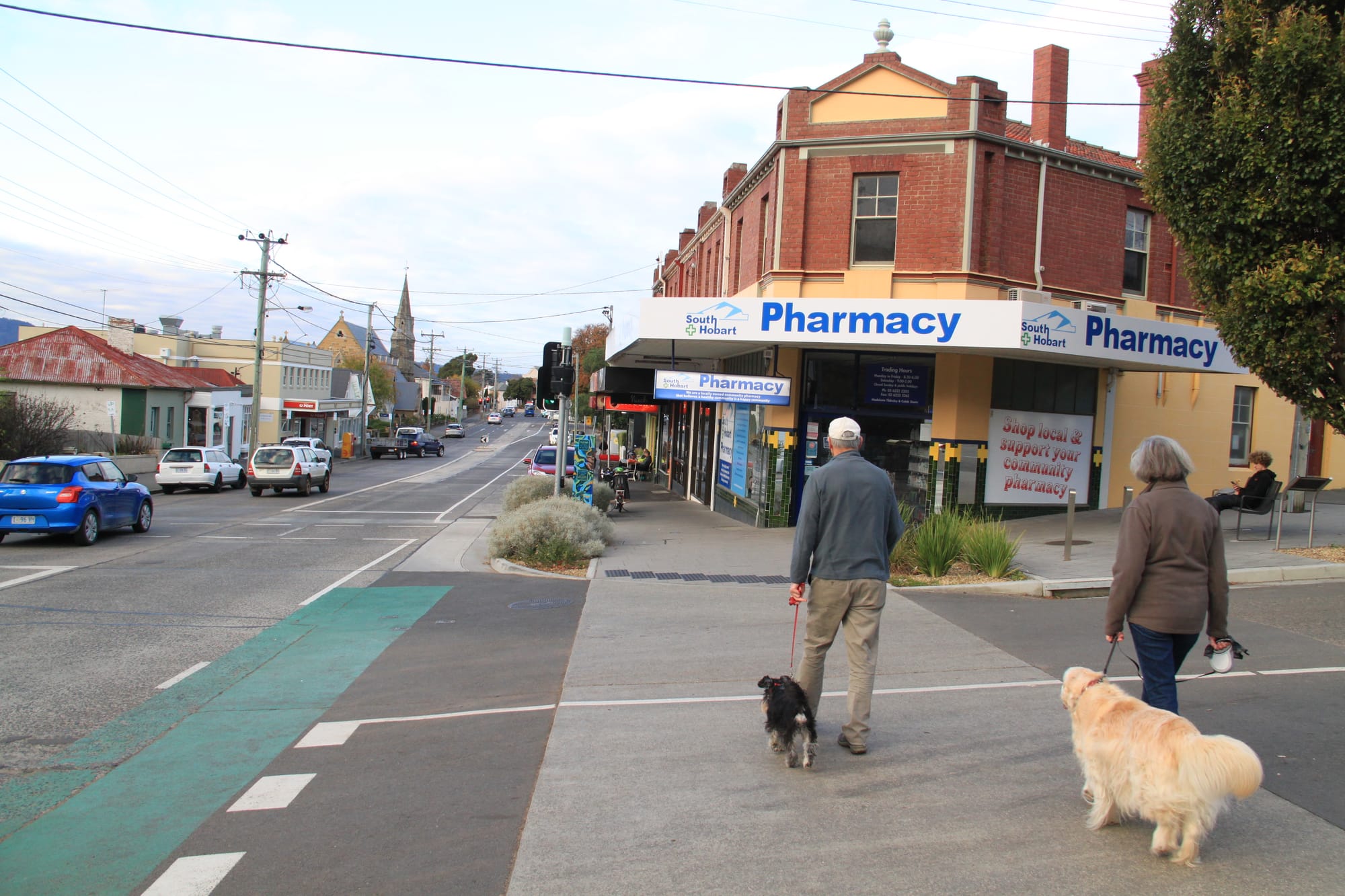
Yes, we support the Movement and Place framework as a useful way to understand
and discuss road safety in Tasmania. The diagram is helpful in demonstrating how
differently streets, roads and highways function. The Government needs to take
leadership in communicating that for higher ‘place’ value, such as streets in our
communities, neighbourhoods, and retail areas, their design must be focused more
on vulnerable road users.
While many state government projects adopt elements of Safe Systems design,
they have not used Movement and Place methodology. This is important for
protecting vulnerable road users like people cycling and walking. Acknowledging
that a street attracts a lot of people walking and riding means that low speed limits
and traffic calming is needed or better separation of those people from traffic.
Adopting both approaches for all road projects will help ensure that new and
upgraded road projects are better protecting people walking and riding and that
such design elements are incorporated from the beginning of a project rather than
being discretionary add-ons that can be discarded once budgets become tighter. It
should also mean that any state government funding for road projects to local
councils is dependent on the approaches being taken.
Action Area 1: Safer Behaviour and Choices
We support this action area.
Action Area 2: Safer Cities, Neighbourhoods and Places
We strongly support this action area.
What actions or improvements should be prioritised?
Reintroduce ‘Better Active Transport in Tasmania’ grants
The Greater Hobart Cycling Network was endorsed in 2021 by the State
Government and the four metropolitan Councils. The vision was a connected 291km network, specified to All Ages and Abilities (AAA) standard. Spurred on by this vision, all four Councils now have comprehensive plans to improve walking,
wheeling and riding - Kingborough (2021), Clarence and Glenorchy (2025), and
Hobart (2026).
In the three budget cycles between endorsement and 2024-25, only two Councils
(Hobart and Kingborough) built AAA infrastructure, with 6km completed. Both
received grants from the State Government. Based on the progress in those three
budget cycles, and that 63% (183km) of it remains unbuilt, it is estimated the
network wouldn’t be completed until 2105 (in 80 years time).
The State government has developed many plans to improve active transport over
the past two decades, but without any implementation plan or significant funding to support detailed design or on-ground works. Consequently, the plans have fallen short of their targets to significantly grow participation. Therefore, we call on the Government to partner with Councils for the full implementation, through a targeted investment program as a 15 year project (and seeking Federal grant support, like has been done for other major projects, such as the Midlands and Arthur Highway upgrades).
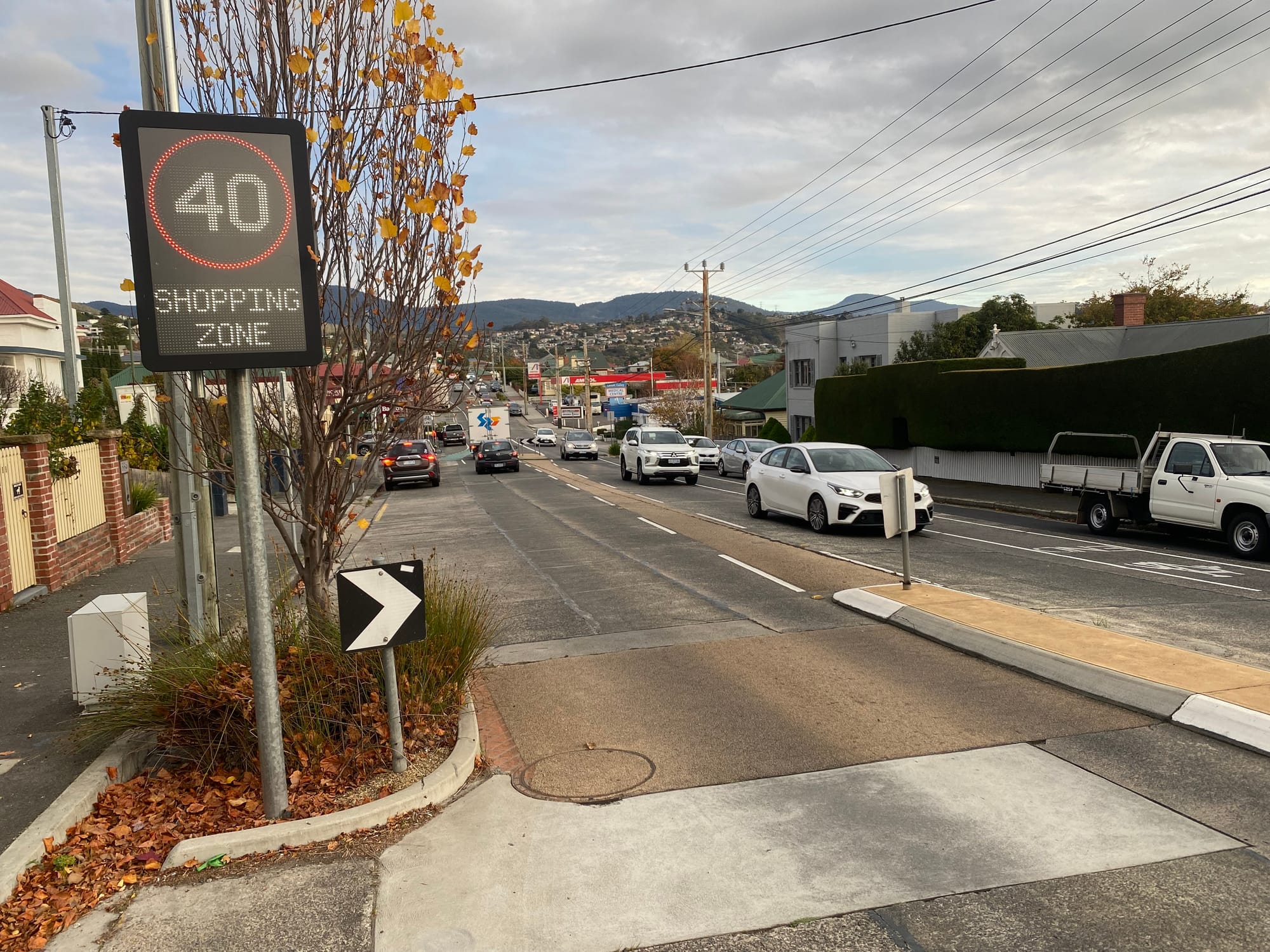
Reduced urban speed limits
Lets learn from the Norwegian, Swedish and Icelandic governments - lower urban speeds save lives. Given we are currently at 50km/h in most urban settings, we see
merit in a blanket ruling that 40km/h be the new default limit.
Boost the Vulnerable Road User and Safer Local Roads Programs funding
Reduced speed limits on roads which have been designed for higher speeds is not
enough in isolation. As per the “Movement and Place” approach, complementary
traffic calming measures like raised platform crossings and intersections, narrowed traffic lanes, and creation of modal filters (as per Tasmanian Cycling Infrastructure Design Guidance) are also required to slow down traffic. The current allocation of $2.5m for VRUP and no State funding committed to SLRP beyond this year does not indicate a serious commitment to improving safety for the most vulnerable users of the road network.
Action Area 3: Safer Travel on Roads Designed for Movement
We support this Action Area.
What actions or improvements should be prioritised?
Sealing and widening road shoulders provides space for drivers to recover their
vehicles if they depart the lane. They are also a place for people to ride who are
comfortable riding on roads, such as recreational road cyclists.
We have also provided Appendix A outlining the significant support for improving
active transport across a variety of State Government endorsed statutory planning
frameworks, policies and strategies.
We have previously written to the Minister for Transport concerning the decision to cut funding for active transport from the current and future budgets. In response, he reassured us that active transport would be integrated into the design for any projects undertaken by Building Tasmania.
We trust our comments are helpful in preparing the Draft Road Safety Strategy to
something that aligns strongly with the State’s targets, and the Minister’s
commitment, for improving active transport outcomes which will in turn improve
road safety for all Tasmanians.
Yours sincerely
Mark Donnellon
President – Streets People Love Hobart