Transforming Collins Street - Round Four consultation

In June 2026, the City of Hobart invited the community to provide feedback on the Transforming Collins Street project, for the first anniversary of the trial. This was the fourth of five consultation rounds to assess community and business sentiment. A number of changes had occurred since the previous consultation (Dec 2025), to complete the installation of infrastructure between Victoria Street and Murray St. These included:
- changes at Murray Street junction to produce a compliant scramble crossing,
- an "in-lane" bus stop and the protected bicycle lane on the "City Bound" side of the street
- coloured surface treatments, kerbs and bollards
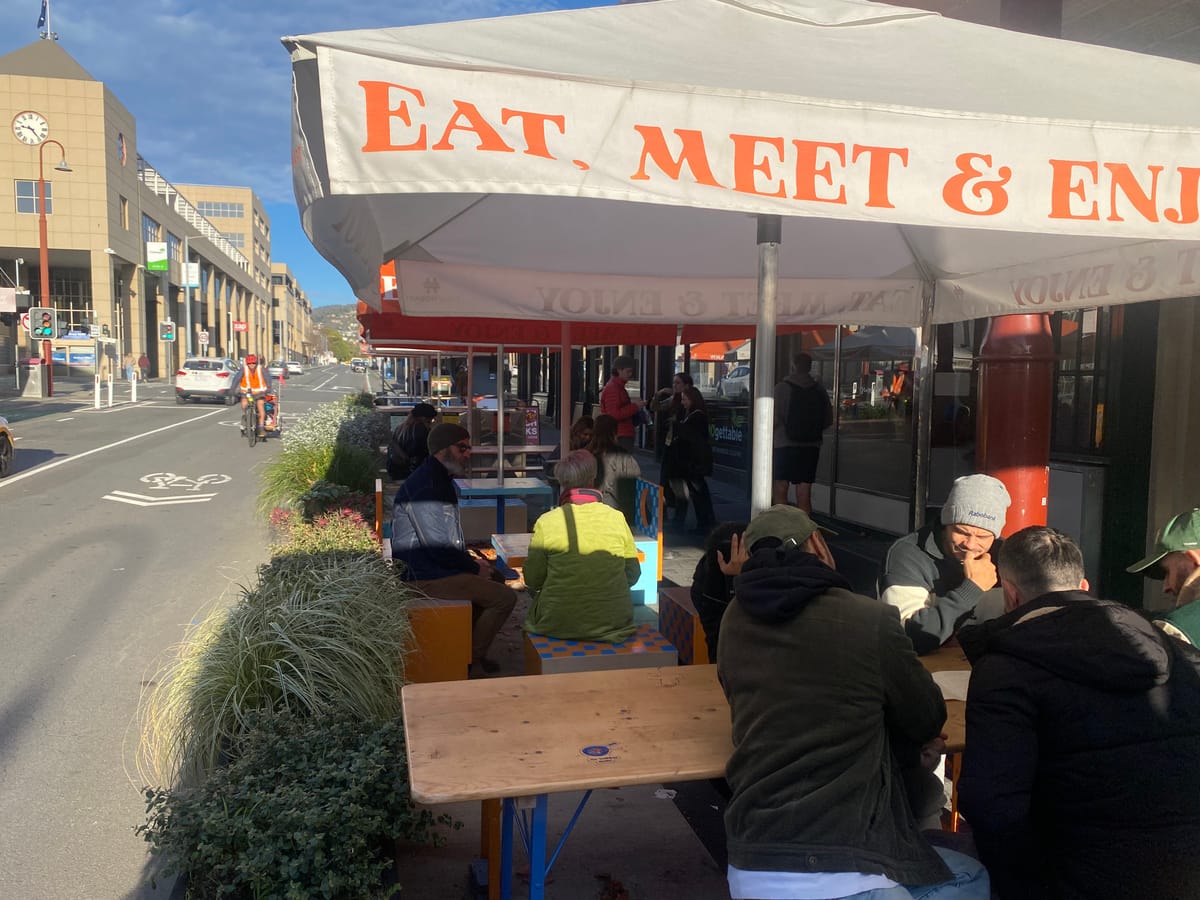
- outdoor seating and dining infrastructure (adjacent Fullers, Lucinda, Dier Makr, and Sawak Cafe)
- planter boxes, and
- reinstating a two-lane Victoria Street approach to Collins Street.
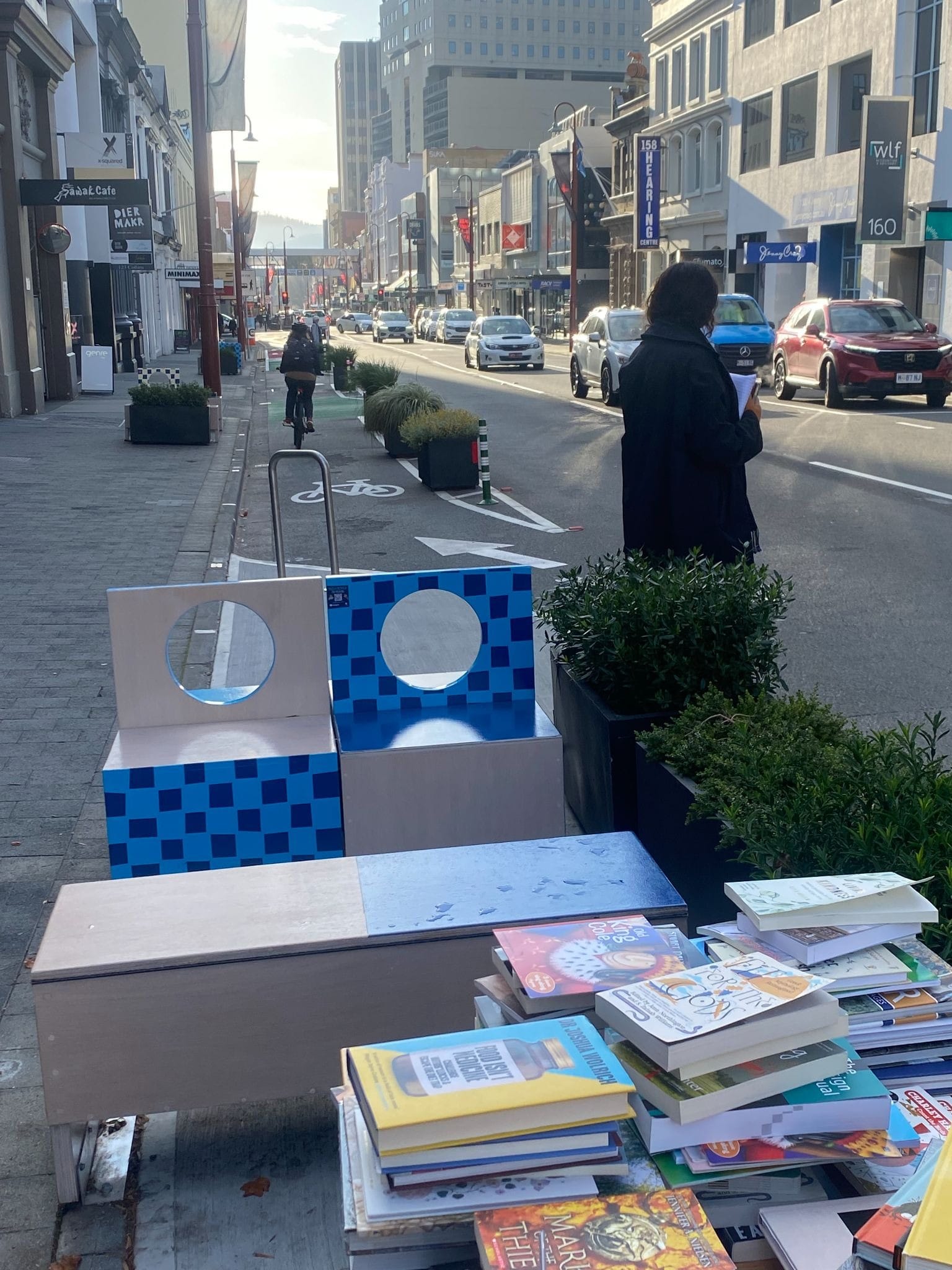
We felt this warranted a detailed submission, particularly given permanent installations are listed a priority project for Council in the recently endorsed Hobart Bike Plan (2026), if the trial is deemed a success. We also consider the project could potentially attract Federal Government funding support through their $500m Active Transport Fund announced in the latest budget.
Our submission, prepared by Ben Clark and Anna Johnston which was reviewed and submitted on behalf of SPLH, notes the connection between Hobart Rivulet and the city as one of the city’s big urban revitalisation opportunities and some improvements we think would improve it should the Council endorse a permanent installation (at the conclusion of the trial).
-
Submission to Transforming Collins Street - Round Four engagement (One year post installation)
12th June 2026
Prepared by Ben Clark and Anna Johnston.
Reviewed, endorsed and submitted by Hayden Norfolk, Vice President.
Thank you for the opportunity to provide feedback on Transforming Collins St.
Streets People Love Hobart is a community-led initiative organised by a passionate group of local advocates and supported by many local businesses. Our mission is to advocate for streets that prioritise people, safety, and sustainability. We believe Hobart and population centres across Tasmania deserve vibrant, welcoming spaces where everyone can connect, move, and thrive.
We have focused our comments on the elements of the trial that are intended to improve connections to the CBD and natural areas like the Hobart Rivulet, and enhance the general amenity of the area (aligned to Section 3 of the user survey).
Streetside dining:
- We are pleased that these areas are popular throughout the day, from breakfast coffee to evening dinners. The fact they are for general use, rather than being tied to one or more specific businesses, works really well.
- The use of vibrant colours, and the planter boxes, create a lot of visual interest compared to the pre-trial situation of four on-street parking spaces. The provision of bicycle parking rails at either end of this has also been a welcome addition.
- We like the additional seating recently installed near Fullers and Dier Makr/ Lucinda Wine Bar, and it already seems well used.
Separated cycle lanes:
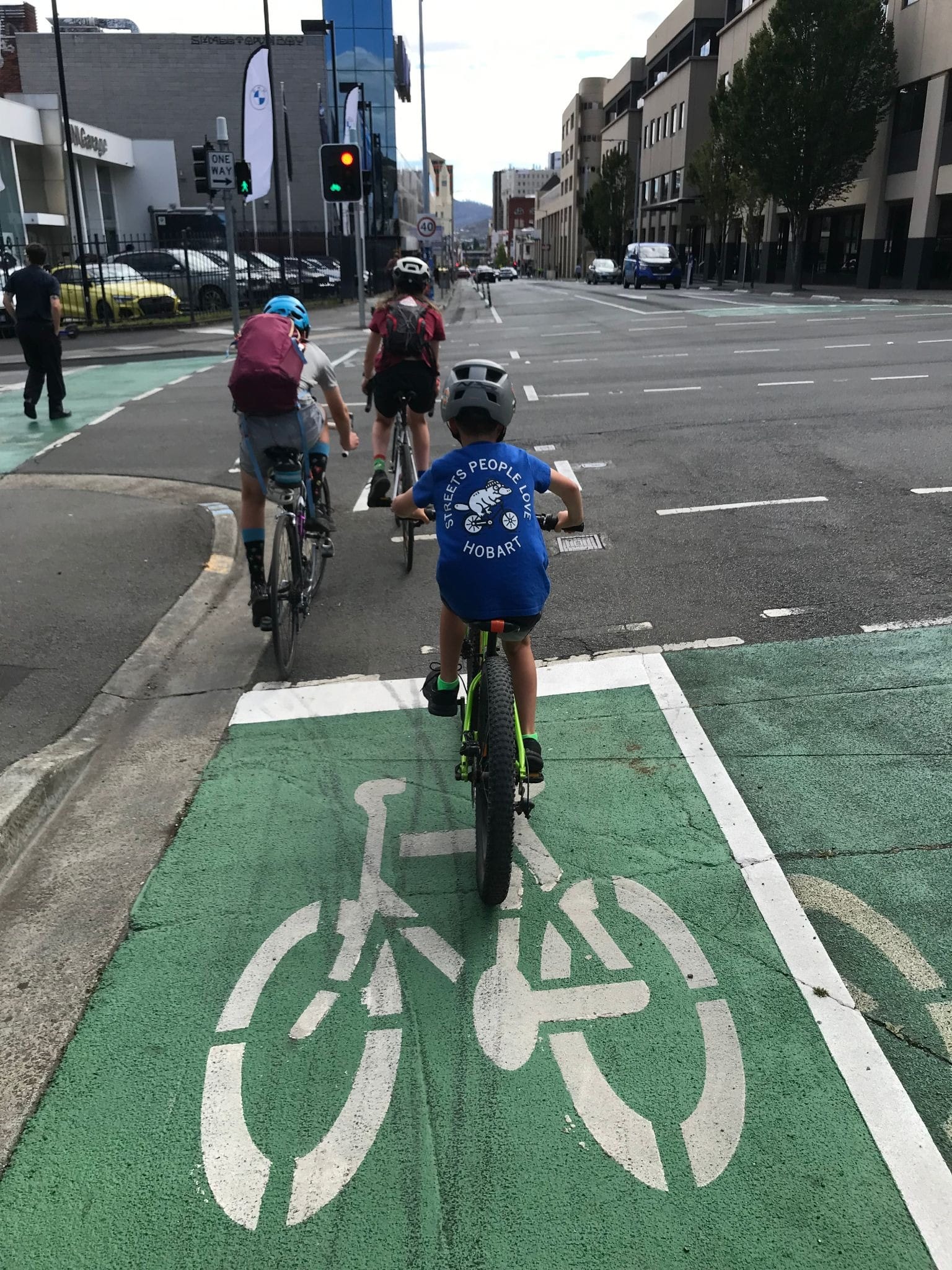
- Looking at the types of people using the street, there seem to be a mix of ages, genders and types of micromobility options – some scooting, many riding, and a significant number of walkers.
- Some delivery van drivers are leaving side or rear doors open, causing a partial obstruction of the cycle lane, or unloading boxes into the cycle lane. It is hoped this pattern of behaviour will start to change in the second year.
- We have had many parents say they feel confident to let their children ride into the city, knowing they are separated from moving traffic. Some are using cargo bikes to deliver their children to school then continuing into the city.
- We also hear from many city workers who now incorporate riding to work along Collins St, as they feel safe to ride within the protected lanes.
Accessible parking spaces:
- We support the retention of designated accessible parking spaces. This is part of a mature city providing for its citizens' needs.
Street plantings and greening:
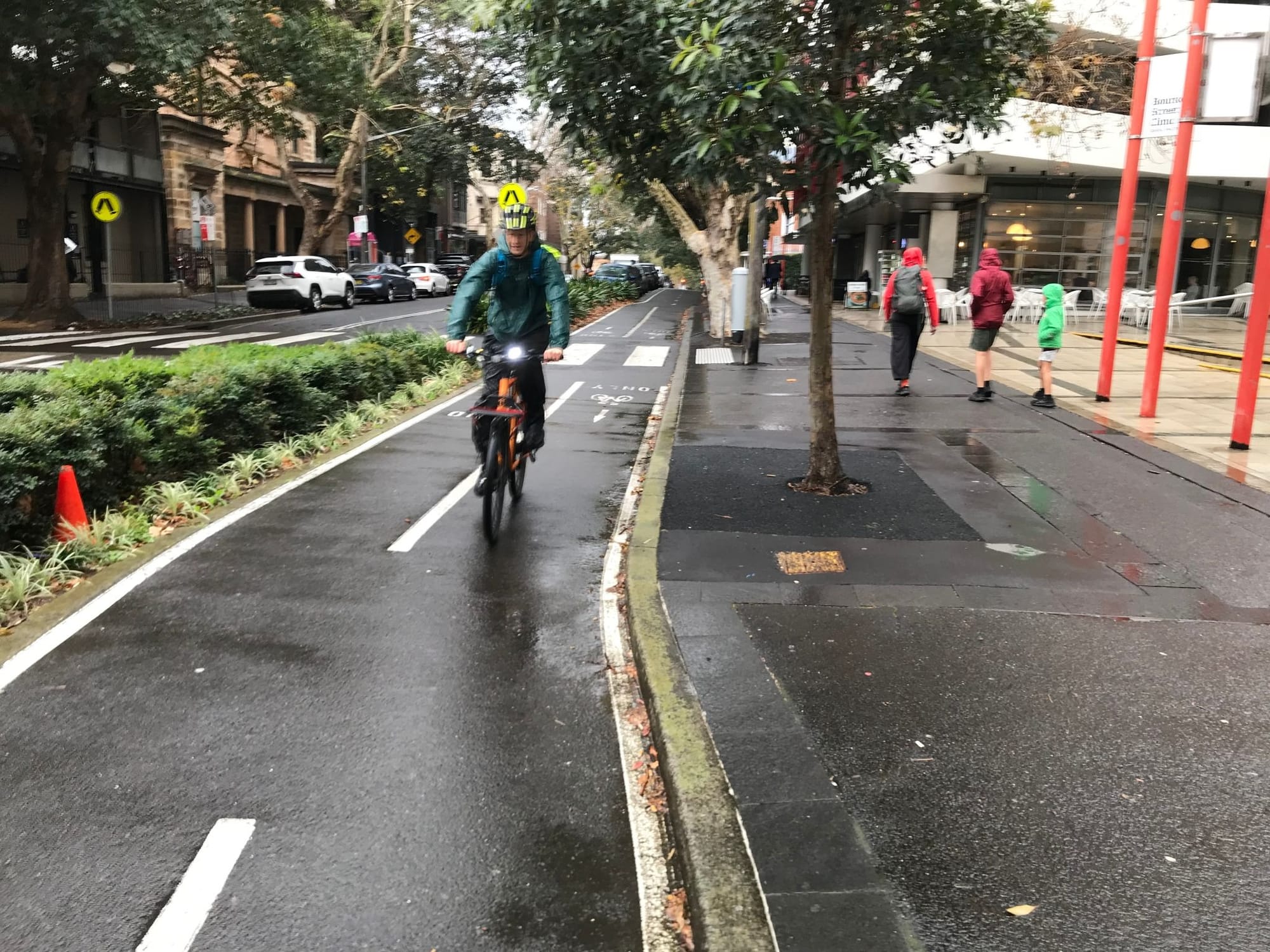
- The planter boxes being used to delineate the start of the lanes near Molle St, and to separate the cyclists in the section between Victoria St and the floating bus platform is a welcome treatment.
- Should the Council deem the trial a success and look to make the lanes permanent, we strongly suggest integration of low plantings to soften the protected lane from moving vehicles and/or footpath, especially along the Molle to Harrington St sections. Examples below from Adelaide (Frome St) and Sydney (Bourke St) for inspiration.
New zebra crossing:
- Pedestrian crossing seems to work well – although our members have observed some people are tentative in taking the first step, unsure if drivers or cyclists will stop.
Removing the single vehicle lane exit from Victoria St in early 2026 was something that we didn't expect to happen, however, we accept a trial of this nature does allow for this sort of change. It seemed to be based on a few peak weeks leading up to Christmas when the Centrepoint carpark was busier than usual. We would be interested to hear if reverting to the dual lane has changed much in terms of vehicle traffic flow, and the perception of pedestrian safety. Our members had reported delight at the initial reduction to a single lane, and a decreased feeling of safety and additional conflict with drivers when it was reverted back to dual lanes.
Lower speed limits:
- In general, the street feels calmer with the reduced speed limit (and visual narrowing of the road with various other measures). A 30km/h limit along the entirety of Collins St would be worth considering beyond the life of the trial.
Bus Boarder trial:
- We support the Platform bus stop during the trial period of the street transformation, as it provides clarity for people boarding buses as first priority, whilst also allowing for safe riding and scooting at all other times. Our members have reported positive experiences with the new infrastructure.
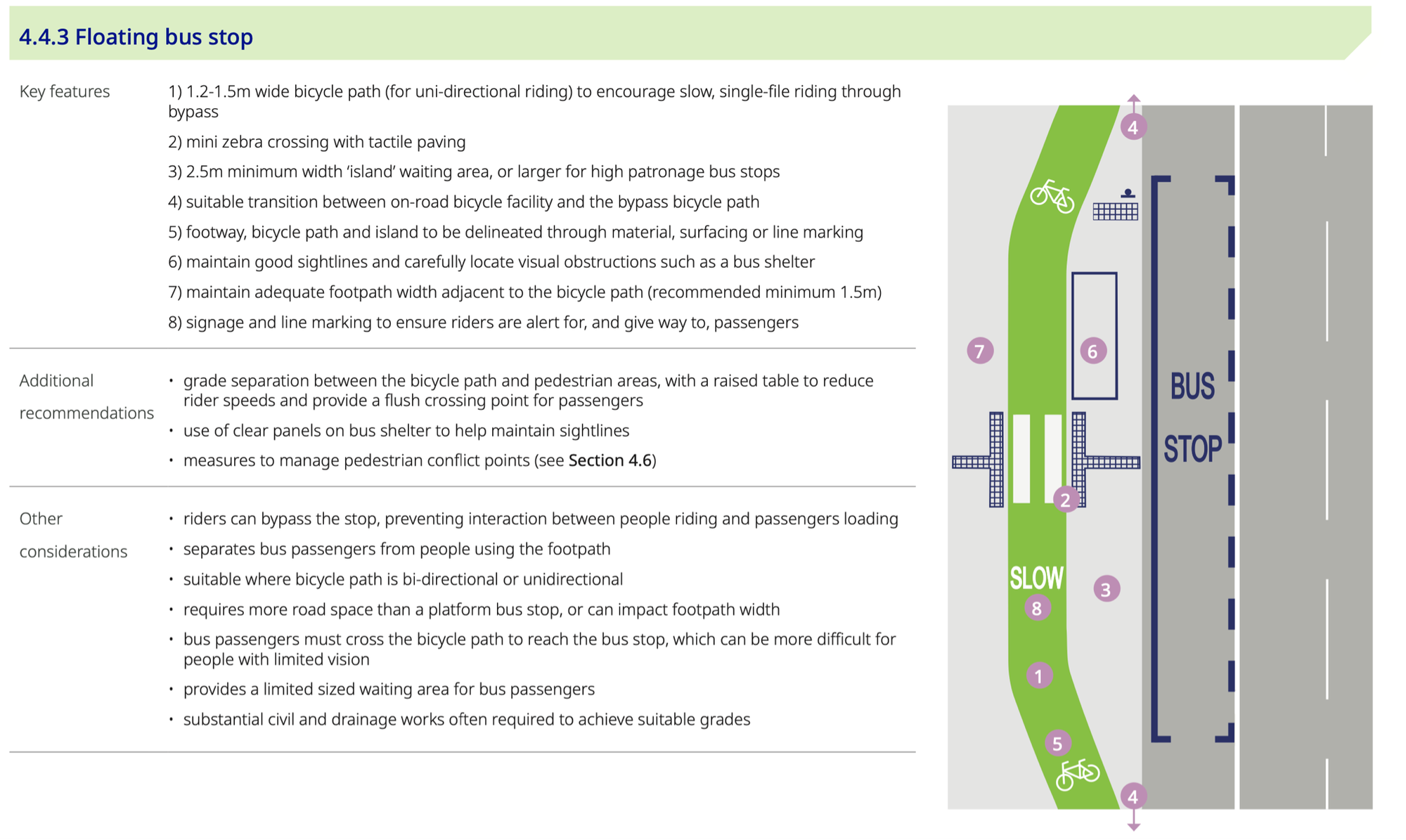
- A more permanent solution that would further reduce conflict between riders and bus users is to install a Floating bus stop.
Fig 1: Platform bus stop design guidelines from the Tasmanian Cycling Infrastructure Design Guide (2025).
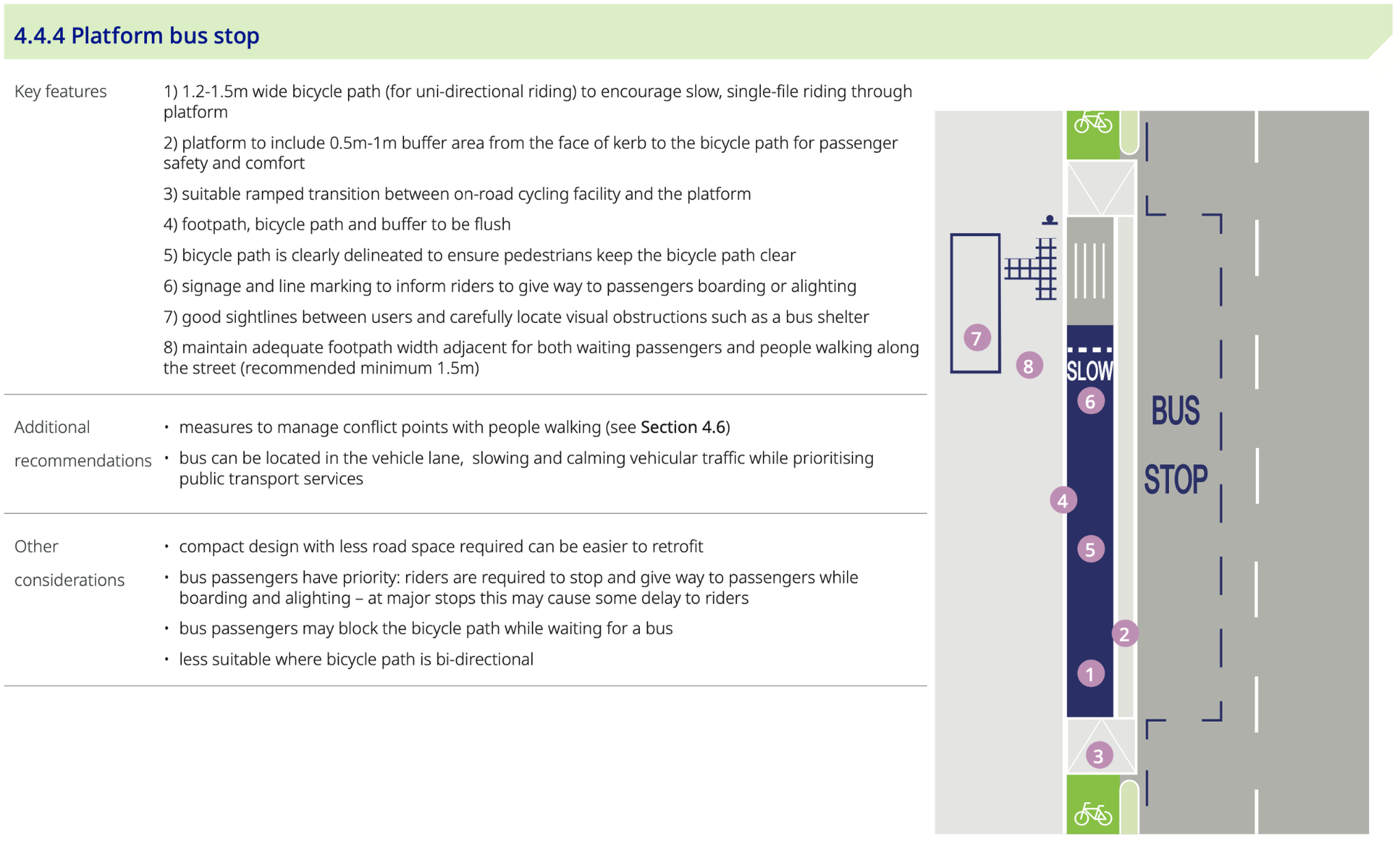
Fig 2: Floating bus stop design guidelines from the Tasmanian Cycling Infrastructure Design Guide (2025).
Other observations
Our members have rarely observed significant traffic delays (i.e. more than 6 vehicles queued at lights for more than one cycle). Our organisation is interested in whether the VivaCity traffic sensor has detected any notable changes.
Our members observe that there are usually many on-street car parking spaces available. This is particularly apparent in the Molle to Barrack St block. Our organisation is interested in whether the parking meter occupancy rates on a block by block basis compares to pre-trial occupancy. It may give scope for this section of the street to have a more generous greenery treatment (i.e. canopy trees), if the decision is made to make the changes permanent.
We hosted a “Dark Ride” during Dark Mofo, which was a huge success, bringing light and colour to the street, at a time when at least one exhibition was held in Coogans, along the street from where the trial is taking place.
Suggested improvements
- The bike 'box' at the Elizabeth St junction feels short given the length of most cargo bikes. Doubling the current length seems more appropriate.
- The turn left movement from Collins St to Harrington St by vehicles has caused some confusion for cyclists that arrive after the initial green light for cyclists. To provide clarity for both drivers and cyclists, perhaps a red light for cyclists could be trialled, as is the case with the Campbell St to Liverpool St right turn.
- The visibility of infrastructure used to delineate bicycle lanes and protect cyclists should be improved. Notably, by using tall bollards rather than concrete blocks wherever possible, and fixing any lane marking infrastructure to the road. Our members have reported the current cement bollards are too low to be easily seen, and planter boxes, which have not been fixed to the road, have been pushed into the cycle lanes at times, creating hazards.
- The section of Collins Street between the new Platform bus stop and intersection with Murray Street could use clearer signage, additional lane marking, bollards, or a combination thereof, to clearly show that it is a cycle lane most hours of the day, and only includes a Loading Zone between the hours of 3am–6am. Our members have reported the bike lane is often blocked by parked cars, at all times of day.
Beyond the tactical trial
We see the potential for this connection between Hobart Rivulet and the city as one of the city’s big urban revitalisation opportunities. As envisaged in the Inner City Action Plan, Collins St could become a ‘blue/green corridor’, that is even more inviting to walk, scoot or cycle along, rather than the stark bitumen setting that it predominantly presents as now. There are numerous examples interstate and overseas where cities have transformed similar streetscapes, so we have plenty of templates to learn from.
Considering the Macquarie Point stadium is starting construction, and there is an expectation of thousands of people riding bikes to the venue, it would be worth extending the tactical trial to the two blocks of Collins St between Elizabeth St and Campbell St, to link with the protected lanes there that lead to the waterfront. The road width would allow for a similar sharing of space, and go a step further to connecting the network envisaged in the recently endorsed Hobart Bike Plan.
We are delighted that the Federal Government recently announced $500 million over ten years from 2026–27 (and $50.0 million per year ongoing) to continue the Active Transport Fund. We also note the funding is ‘front-loaded’ to maximise its impact in the first three years, with $234.3m allocated from 2026-27 to 2028-29. Whilst the final Council decision is still a year away, we note the permanent installation has been identified as a priority in the recently endorsed Hobart Bike Plan (2026-31). Without pre-empting the Council’s decision, it would be wise for Council to have a preliminary discussion with the Federal department about potential future funding application for this project. We would be happy to provide a letter of support should Council make an application for this project.
Finally
We look forward to seeing additional improvements to Collins Street as the trial continues, and hope to see effective changes made permanent at the end of the trial, for the improvement of our city for all its inhabitants. We note that despite early opposition to the Bourke St cycleway during its installation, ten years on, the bicycle path has gained widespread acceptance among residents, with 83.1% believing it positively contributes to their street. Other key findings were that residents wanted more places to sit and socialize (68.9%), more cafes and shops (63.3%), more tree planting and gardens (54.7), fewer cars (30.2%), slower-moving cars (23.4%), and more playgrounds (22.8%).
--
Note: After we had submitted, a member alerted us to the surface treatment for the new raised platform appearing to be resin bonded crushed 5mm red glass, and the hazardous nature of this is someone falls on it (i.e. likelihood of severe grazing, cuts). We are following up with Council as to the reason for this surface treatment.